
10 Candidate Screening Tools for Legal Hiring in 2026
November 2, 2026 · 14 min read · Five Star Placements

Table of contents
Buying the tool with the longest feature list is the most popular advice in legal hiring, and it's the wrong starting point. Most firms don't lack software. They lack a clear view of which screening job each tool can do. A résumé parser can't tell you whether an associate writes a persuasive brief. A personality test can't confirm bar standing. A background check can't judge client presence.
That's why this list sorts ten candidate screening tools by function, not feature count. Workable, Greenhouse, and Lever organize workflow. Criteria, TestGorilla, and HackerRank produce skills evidence. Spark Hire and HireVue handle first-round interviews. Checkr and GoodHire run identity and background checks. Each category answers a different question, and mixing them up creates false confidence.
The risk isn't theoretical. In testing described by the University of Washington news report, researchers used more than 550 real-world resumes, over 500 job descriptions across nine occupations, and 120 first names, and found resumes with white-associated names were favored 85% of the time, compared with 9% for resumes with Black-associated names. Black men were never favored over white men in the tested comparisons.
Use automation to route, structure, and surface evidence. Keep attorneys and experienced recruiters responsible for writing quality, matter judgment, credentials, and the final decision.
Table of Contents
- 1. Workable
- 2. Greenhouse
- 3. Criteria
- 4. TestGorilla
- 5. Spark Hire
- 6. HackerRank
- 7. HireVue
- 8. Checkr
- 9. GoodHire
- 10. Lever
- How the candidate screening tools compare on pricing and fit
- Build a Screening Stack That Tests What Matters
1. Workable
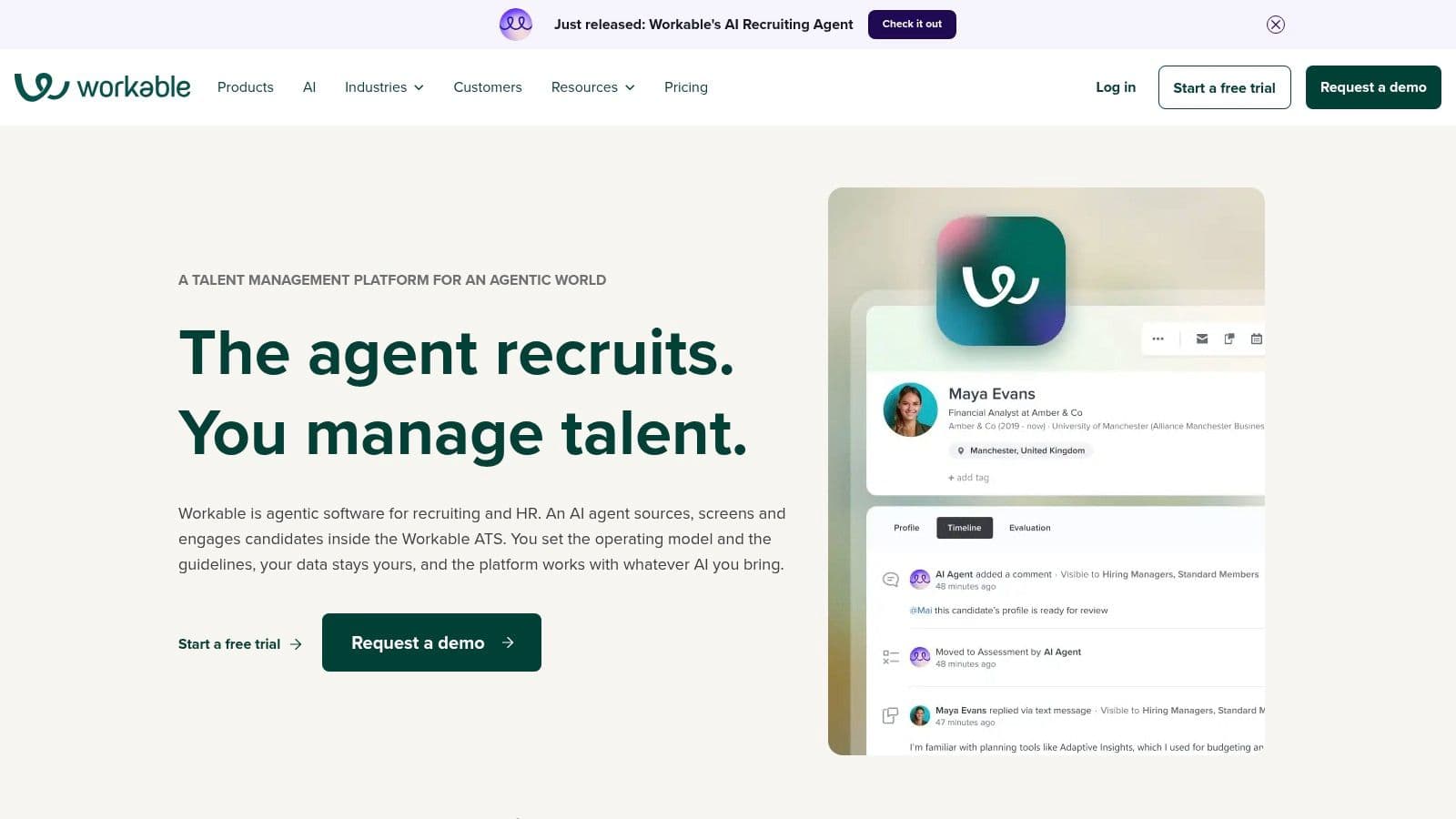
For a smaller legal team that needs one system instead of four subscriptions, Workable is the practical starting point. It combines applicant tracking, sourcing, customizable stages, and screening workflows. Its AI-assisted Workable Agent compares applicants with a defined candidate profile, gives a match score with reasons, and flags missing information while your team keeps control of decisions.
That throughput role fits how adoption is working in practice. In SHRM's 2025 Talent Trends survey of 2,040 HR professionals, 43% used AI for HR work, up from 26% in 2024, and among AI users, 44% applied it to resume screening. Treat Workable the same way. Let it review every applicant, then send borderline and high-value profiles to a human.
Where It Helps Legal Hiring
- Criteria by role: Screen for practice area, years of experience, jurisdiction signals, and certifications instead of relying on one generic score.
- Structured evaluation: Interview kits and scorecards keep partners comparing the same evidence.
- Flexible controls: Screening, sourcing, and outreach can be enabled or disabled by workflow.
Pricing is published by organization size, a 15-day free trial is available, and advanced screening can require additional AI credits. The Agent currently supports English only, so bilingual intake or immigration practices should test that limit before committing.
2. Greenhouse
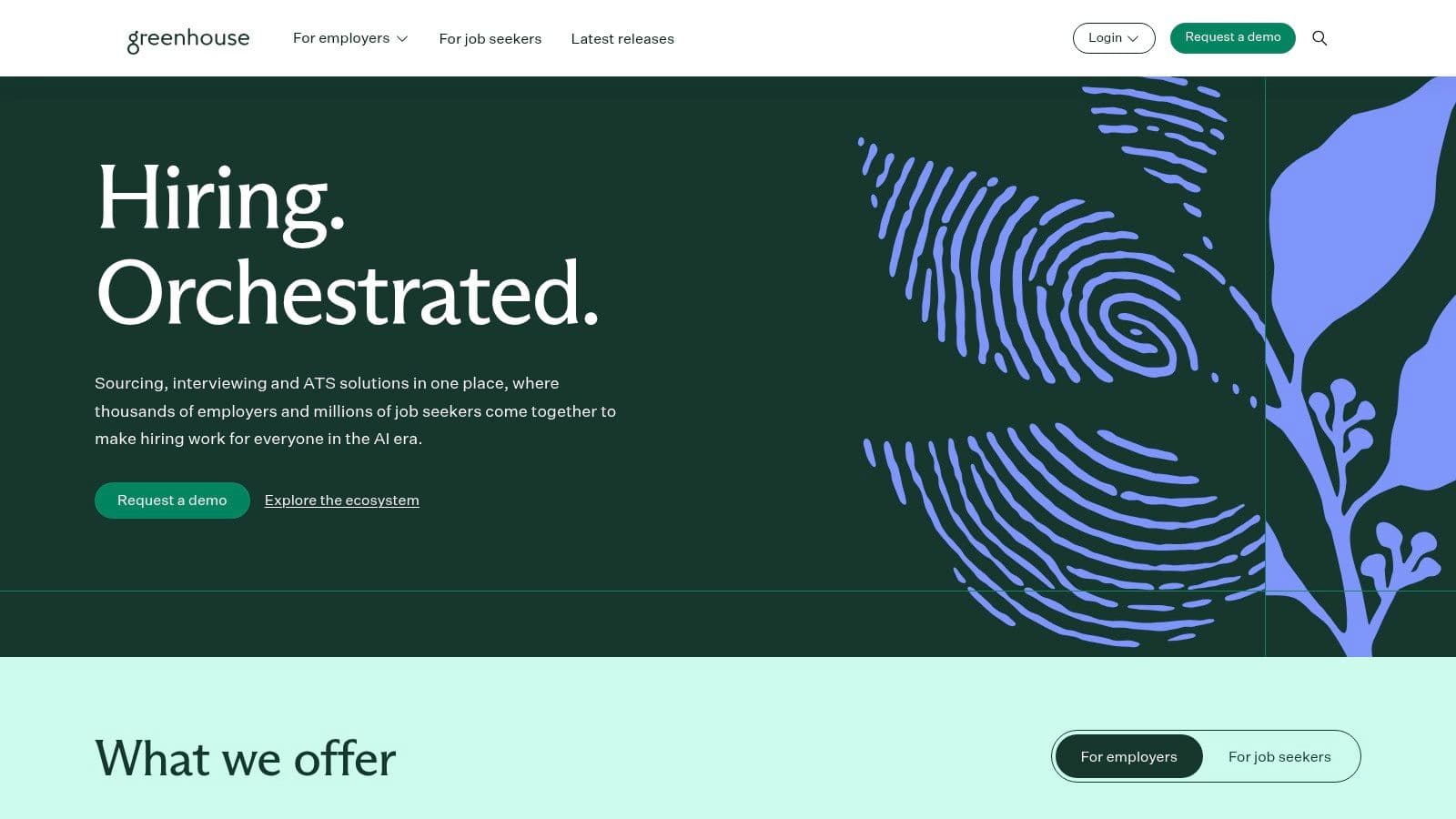
Greenhouse is strongest as a hiring workflow, not as a test of legal ability. Its interview kits, scorecards, scheduling, reporting, and shared pipeline help several interviewers assess candidates using a consistent process. For lateral associate searches, partners and HR can record distinct views on writing, matters handled, and client exposure without scattering feedback across email.
Its Real Talent offering adds candidate matching, identity verification, and fraud and spam detection. Treat those signals as prompts for review. A fraud flag does not establish that a candidate is unqualified or dishonest, and the platform does not replace human judgment about attorney writing, bar standing, or practice-area fit.
That distinction matters at scale. Stanford's Institute for Human-Centered Artificial Intelligence reports on a different, unnamed vendor's screening tool, not Greenhouse. The study describes 3.4 million people submitting 4 million applications assessed by that tool. Under the four-fifths rule, 26% of Black applicants and 15% of Asian applicants applied to positions where the system discriminated against their racial group. These figures are a warning to scrutinize automated screening, not evidence about Greenhouse's outcomes.
- Pros: Strong collaboration, structured interviews, useful authenticity signals.
- Cons: Custom pricing requires a sales conversation, and the platform may exceed a small firm's needs.
Choose Greenhouse to organize evaluation. Keep legal-role decisions grounded in direct review of relevant evidence.
3. Criteria
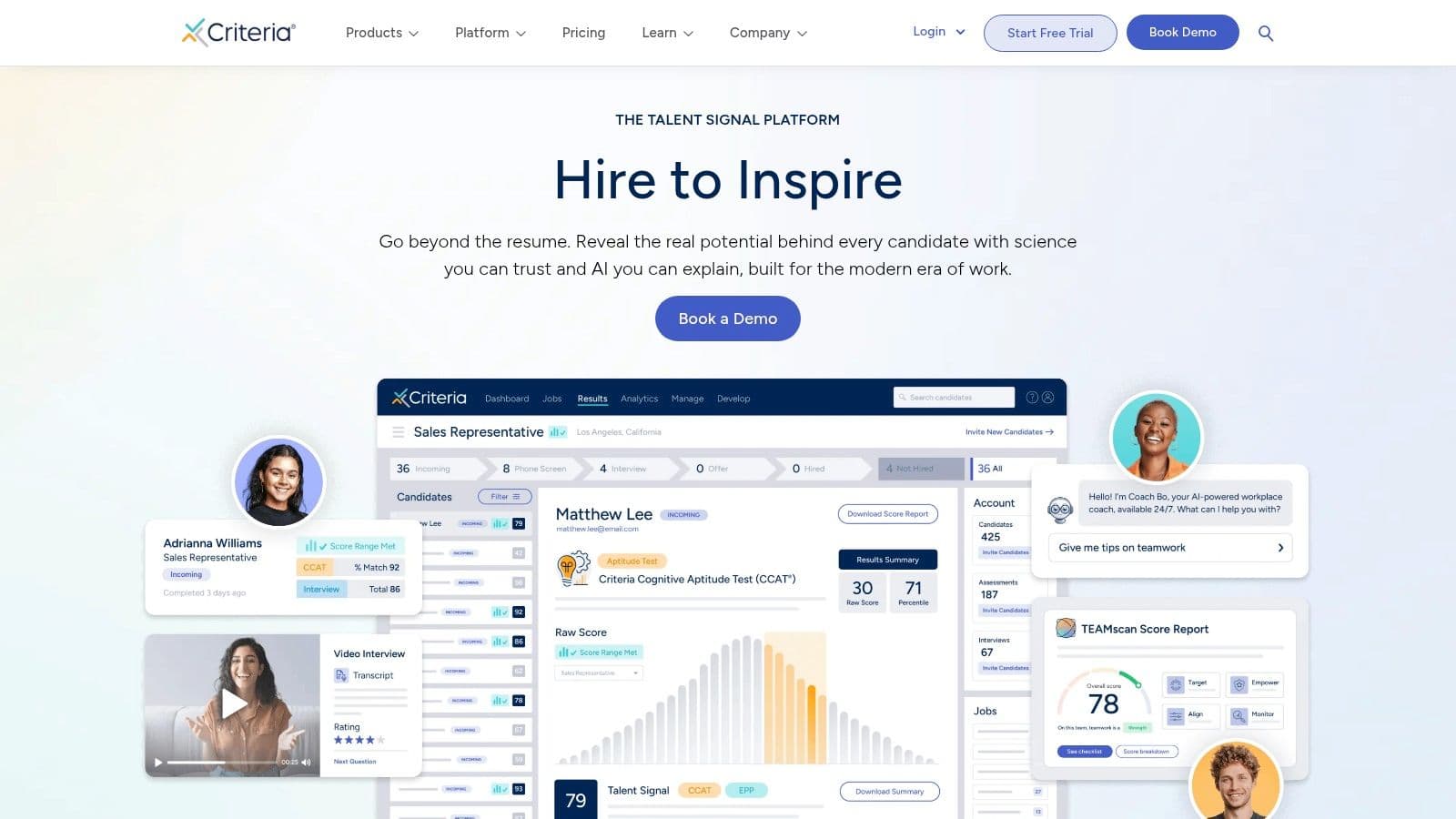
Ask a narrower question before you consider Criteria. What measurable ability does this role require? Criteria offers cognitive aptitude, personality, emotional intelligence, risk, and job-related skills assessments, plus video interviewing. Used carefully, that library can standardize one step for legal assistants, intake specialists, records staff, or operations roles with clearly defined tasks.
It becomes a poor tool when a generic score substitutes for practice evidence. A cognitive result doesn't show whether a paralegal manages discovery deadlines accurately. A personality profile doesn't establish drafting quality, supervision judgment, or client trust. Criteria also doesn't verify legal credentials, so bar status and employment history still need separate checks.
Use It With Guardrails
- TestMaker and templates: Build or select assessments tied to documented job requirements.
- Proctoring and branding: Keep administration consistent and recognizable to candidates.
- ATS integrations: Store results inside the hiring workflow instead of a separate spreadsheet.
- Interpretation support: Use available candidate support and help reading results rather than treating scores as self-explanatory.
Pricing is available by request, not published. Before rollout, pilot each assessment on one role family, compare results with structured human evaluations, and drop any test that doesn't predict work your team can observe and defend.
4. TestGorilla
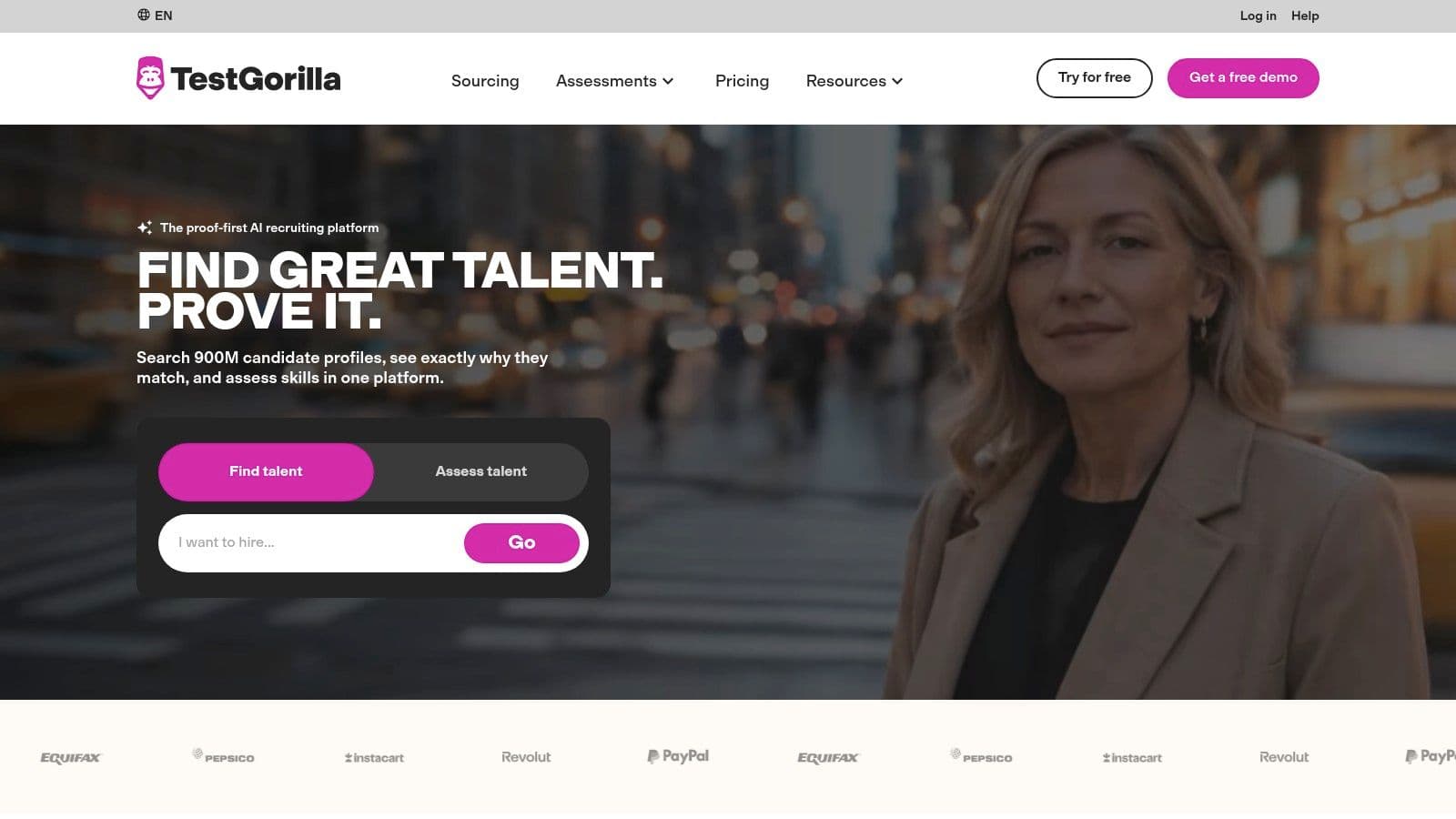
TestGorilla works best as an evidence layer before interviews, not as a verdict on legal ability. Paid plans offer more than 350 skills tests, qualifying questions, résumé scoring, custom questions, video questions, job simulations, and AI interviews on some plans. The free assessment tier includes 10 monthly credits, and paid assessment plans are listed from $215 per month billed annually.
Build different sets for different jobs. A legal operations analyst might complete data, attention-to-detail, and communication exercises. A paralegal screen should weight case organization and written accuracy more heavily. For attorneys, general tests can't establish brief writing, bar standing, or practice-area judgment by themselves, so pair them with a writing sample and matter discussion. A structured approach through a candidate testing service helps keep that sequence consistent.
Don't buy a longer assessment to compensate for a vague job definition. Define the work first, then test only the abilities that work requires.
Credit-based pricing demands volume discipline, and long or poorly matched assessments create drop-off. Keep the battery short, explain why candidates are taking it, and review low scorers whose experience suggests the test may have missed transferable skill.
5. Spark Hire
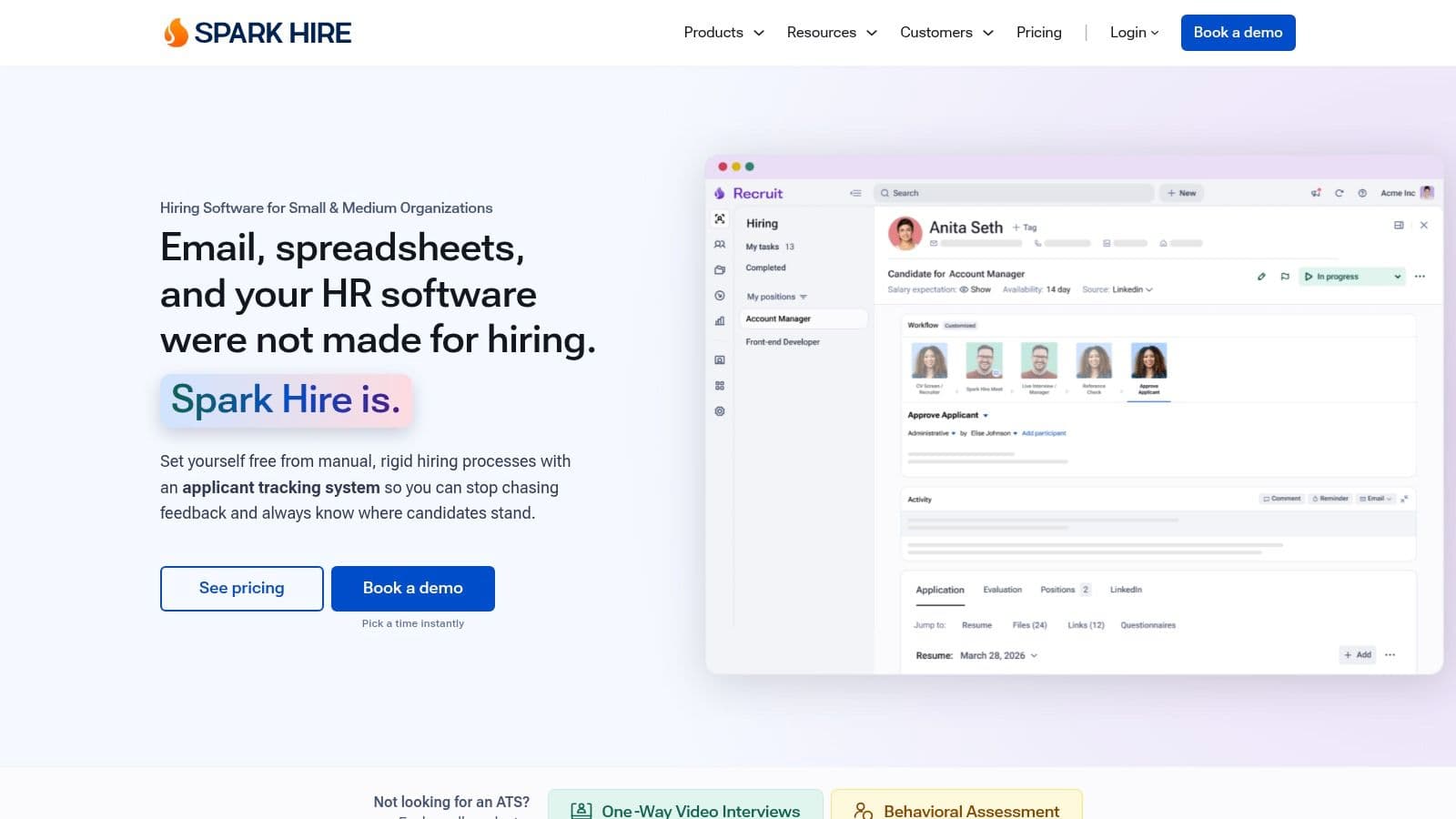
Scheduling five partners for first-round calls can stall a search for weeks. Spark Hire addresses that bottleneck with one-way and live video interviews, custom questions, scorecards, transcription, summaries, and team review. Its ATS plans also include résumé review, screening questionnaires, knockout questions, and workflow tools.
Standardized questions make answers easier to compare, especially for intake, legal assistant, and high-volume support roles. Ask every candidate how they'd prioritize conflicting deadlines or handle a missing client document, then score the substance against the same rubric. Don't grade polish, accent, background, or camera confidence when the job doesn't require them.
Accessibility needs attention before launch. Analysis in the Issues in Information Systems paper on automated screening reports that video systems assessing facial expression, voice, tone, or speech can disadvantage people with physical or speech impairments, and that automated tools may penalize employment gaps. Offer an accessible alternative, tell candidates how to request accommodation, and avoid personality inference from facial cues.
Spark Hire publishes starting prices, though features and cost vary by plan, company size, or annual commitment. Its value depends less on AI summaries than on clear questions and consistent human scoring.
6. HackerRank
HackerRank screens coding ability, not general legal judgment. Its tools include coding assessments, a programming-question library, pair-programming interviews, an AI-led conversational interviewer, proctoring, and integrity features. These can provide useful skills evidence for legal technology engineers, data specialists, and legal operations roles where coding is part of the work.
For attorneys, paralegals, and legal assistants, a timed programming test does not assess legal research, drafting, deposition preparation, or client judgment. Even for technical hires, code output is only one signal. Follow it with a discussion of systems the candidate has built, constraints they handled, and how they would support nontechnical users. Human review still has to establish whether the candidate can apply technical skills in the role.
Cost and Fit
- Published entry point: The Starter plan is listed at $79 per month billed annually for 60 candidate attempts per year.
- Attempt limits: Additional attempts cost extra, so forecast volume before selecting a tier.
- Integrations: ATS and calendar integrations are available on higher-tier plans.
- Best use: Targeted technical screening when coding is a documented job requirement.
HackerRank addresses a specific screening task, not general legal hiring. Use it to assess coding when the role calls for it, then rely on role-specific human evaluation for the rest.
7. HireVue
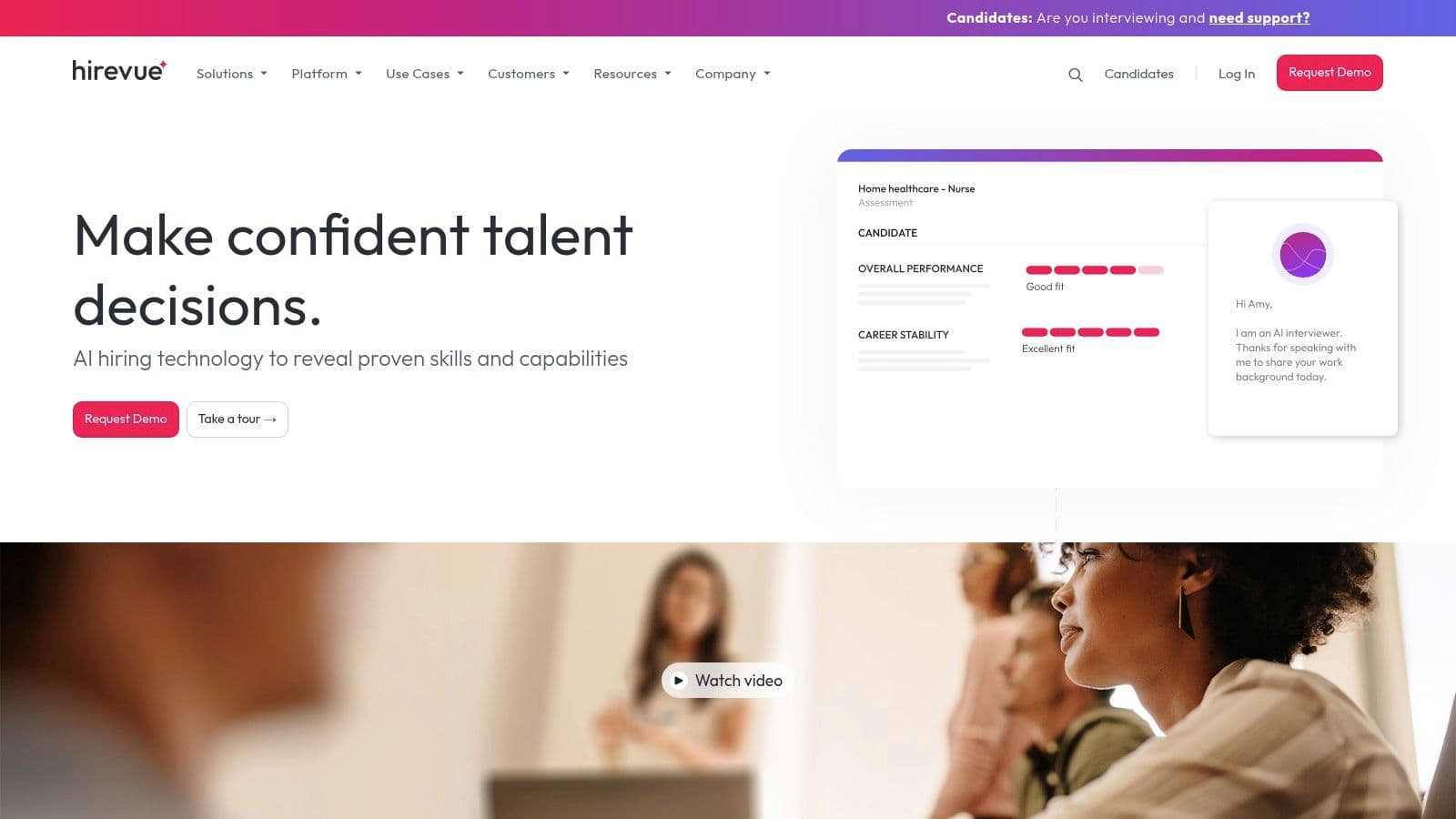
HireVue is built for larger, distributed hiring operations that need assessments, structured interviews, candidate engagement, scheduling, and workflow tools in one enterprise platform. It offers pre-employment assessments for skills, behavior, and personality, plus structured and on-demand video interviews across a range of roles and job levels.
That breadth can standardize early evaluation across offices. It can also bury a selective partner or lateral search under process the candidates won't tolerate. Senior attorneys expect a conversation about matters, clients, and practice fit, not a long automated sequence before speaking with a decision maker. Reserve HireVue for repeatable, higher-volume roles where every candidate can reasonably complete the same steps.
Configuration matters more than the brand name. Confirm each assessment is job-related, provide accommodation routes before candidates begin, and document how a recruiter can override a result. Your broader candidate selection methods should specify which evidence can advance someone and which evidence requires human review.
- Pros: Covers multiple screening and interview stages, supports distributed teams, offers varied assessments.
- Cons: Pricing requires a sales consultation, implementation may be excessive for low-volume searches, and recorded formats need careful accessibility review.
HireVue is infrastructure. Buy it for scale, not prestige.
8. Checkr
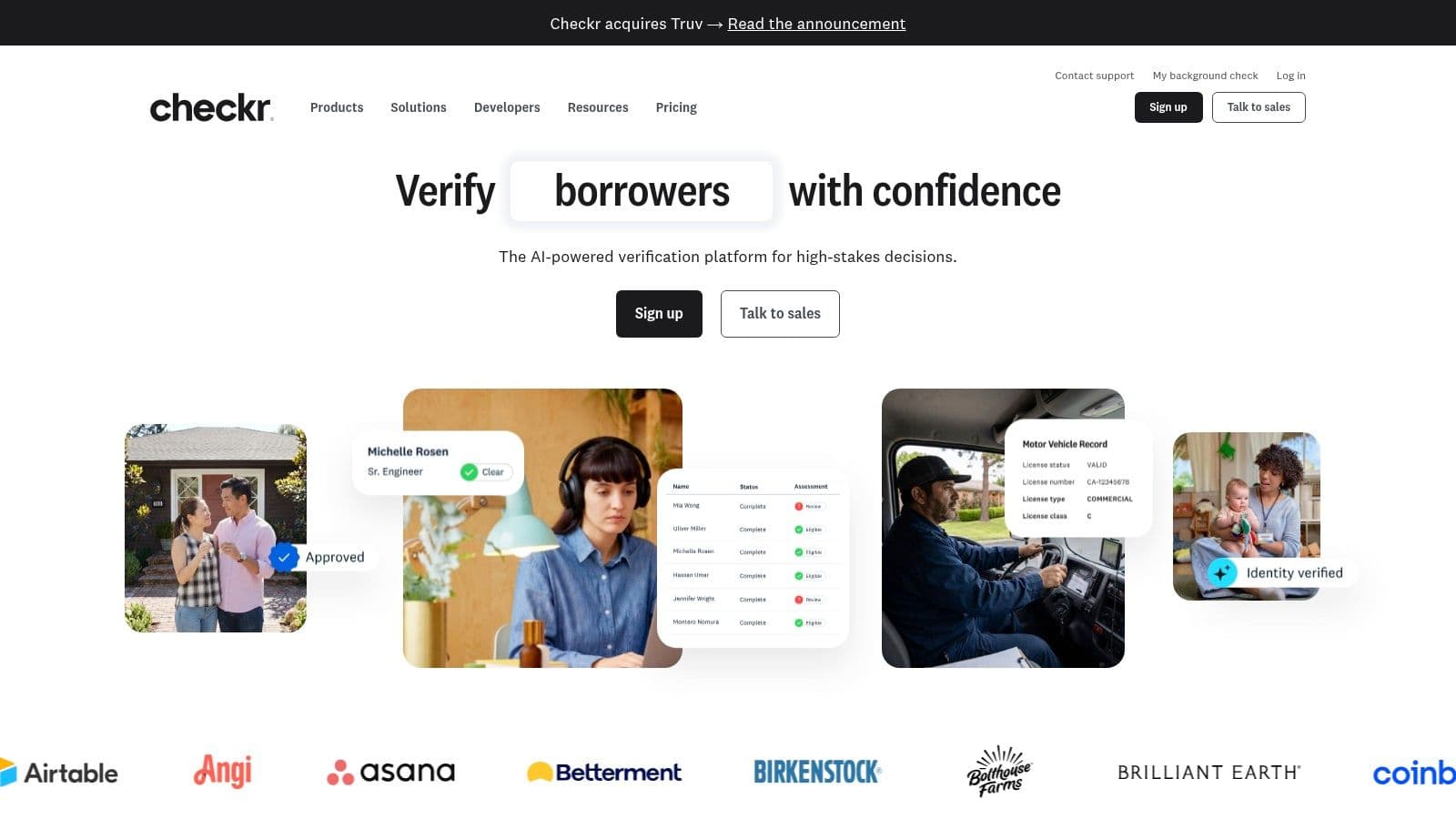
Checkr does one job in the stack. It runs background screening. It isn't an ATS, skills platform, or measure of legal competence. Employers can order criminal-history packages at different coverage levels, with add-ons for identity verification, motor-vehicle records, and drug screening.
Published starting prices range from $29.99 to $94.99 per report, with possible pass-through court and database fees. Pay-as-you-go options help smaller firms estimate basic costs, while enterprise workflows and ATS integrations reduce manual handling for larger teams. Budget for follow-up because a report can require verification, context, and careful review before anyone acts on it.
For legal roles, keep the boundaries explicit. A background report doesn't replace state bar verification, disciplinary history review, conflicts diligence, reference calls, or confirmation of matters handled. The steps and limits involved in attorney background checks should be defined before a search begins, including consent and the procedures your firm follows under applicable United States law.
Practical rule: Run the background check at the stage your policy specifies, review the underlying record instead of relying on a summary flag, and never let a clean report substitute for credential verification.
9. GoodHire
If you already have an ATS and only need a dedicated background-check step, GoodHire is the simpler comparison against Checkr. Now owned by Checkr, it offers Basic, Essential, and Complete criminal-screening packages, plus more than 100 additional screening options for higher-volume customers.
Published package starting prices range from $29.99 to $94.99 per check, although extra third-party fees may apply and volume pricing can require a quote. Clear tiers make it easier to match screening depth to role risk. A records clerk with access to sensitive files, a finance manager, and a lateral partner don't automatically need identical packages, but your policy should explain the differences in advance and apply them consistently.
What GoodHire Can and Cannot Confirm
- Can support: Criminal-history screening and selected add-on checks within your formal process.
- Cannot confirm: Bar admission, legal skill, writing quality, client fit, or the accuracy of every résumé claim.
- Still required: Professional references, credential checks, work-product review, and a human decision on relevance.
GoodHire's appeal is narrow scope without buying a full recruiting system. Don't expand that scope after purchase by treating a background result as an overall suitability score.
10. Lever
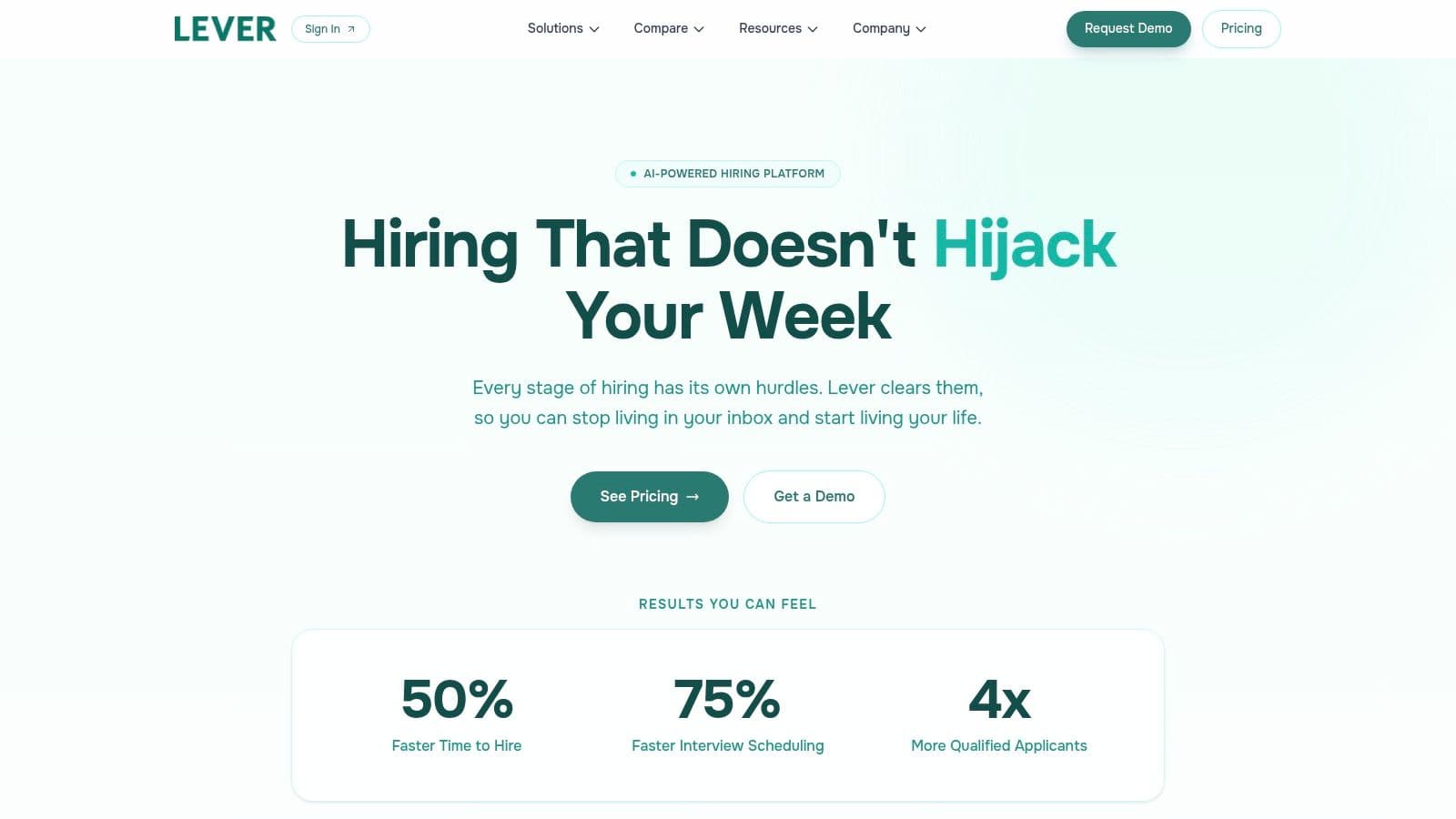
Lever combines applicant tracking, pipeline management, recruiting tools, and AI-assisted candidate matching and screening insights. It's worth evaluating when HR, firm administration, and hiring partners need one shared view of candidates across offices or practice groups. A centralized pipeline can reduce lost feedback and make it easier to see where strong candidates stall.
The AI ranking is the part to interrogate. Ask what evidence drives prioritization, whether recruiters can see extracted practice area, jurisdiction, seniority, and credential fields, and how an override is recorded. Then run the ranking in shadow mode on one search. Compare its order with structured recruiter judgments before letting scores influence who gets reviewed first.
Validation can't stop at removing names. The Eightfold AI evaluation of large language models in hiring found several general-purpose models fell below the 0.80 adverse-impact ratio commonly used as a warning threshold even after personally identifying information was removed, while a domain-specific model performed substantially better.
Pricing is by custom quote. Lever fits firms seeking a broader recruiting platform. It's the wrong purchase if your only gap is a standalone assessment or background check.
How the candidate screening tools compare on pricing and fit
| Item | Pricing model | Free option | Best for |
|---|---|---|---|
| Workable | Organization-size-based plans | 15-day free trial | Smaller teams needing an all-in-one recruiting platform |
| Greenhouse | Custom pricing | Not specified | Structured, collaborative hiring |
| Criteria | Pricing by request | Not specified | Standardized pre-employment assessments |
| TestGorilla | Paid plans from $215/month, billed annually | Free tier with 10 monthly credits | Skills-based screening across different roles |
| Spark Hire | Varies by plan, company size, or annual commitment | Not specified | Asynchronous video interviews and first-round screening |
| HackerRank | Starter plan: $79/month, billed annually | Not specified | Technical or legal-operations roles requiring coding |
| HireVue | Pricing through sales consultation | Not specified | Enterprise and high-volume hiring |
| Checkr | $29.99–$94.99 starting price per report; fees may apply | Not specified | Background checks and verification |
| GoodHire | $29.99–$94.99 starting price per check; fees may apply | Not specified | Standalone background checks |
| Lever | Custom quote | Not specified | Centralized recruiting and candidate pipeline management |
Build a Screening Stack That Tests What Matters
Start with the decisions your search must make, then assign one tool to each decision. Use Workable, Greenhouse, or Lever to structure intake, stages, scorecards, and communication. Add Criteria or TestGorilla only where a requirement is measurable and job-related. Use Spark Hire or HireVue when standardized first-round answers will save time. Reserve Checkr or GoodHire for the background-check stage, and use HackerRank only for roles that require demonstrable coding ability.
Don't stack tools just because each one offers a score. Two scores measuring vague fit don't create stronger evidence. They create more chances to reject a qualified person for reasons nobody can explain. For attorneys and partners, the decisive evidence still comes from matters handled, writing samples, references, jurisdictional experience, client responsibility, and a direct conversation about judgment. For paralegals and support staff, add work simulations that mirror calendaring, document accuracy, case organization, and communication with clients.
Validate Before You Scale
Pilot one tool on one search before committing to an annual plan. Build a human-reviewed reference set rated against documented requirements, then compare the tool's advancement and rejection outcomes with expert judgments. Validate attorneys, partners, paralegals, legal assistants, and legal operations leaders separately because résumé conventions and success criteria differ across those groups.
Governance should be specific enough to audit. Guidance in the SelectionLab article on AI hiring audits calls for subgroup selection rates, disparate-impact ratios, false-positive and false-negative rates, sample sizes, decision thresholds, and system or version changes. The four-fifths rule flags potential concern when a protected group's selection rate falls below 80% of the highest-selected group's rate. Treat that result as a trigger for investigation, not automatic proof of unlawful discrimination.
Store the input résumé, extracted attributes, model score, threshold, reviewer disposition, and override reason for every decision. Monitor drift quarterly and after material changes to the parser, scoring model, job template, or labor market. Require audit logs, human override capability, reproducible scoring, subgroup reporting, and a process for correcting systematic false negatives in procurement.
Keep the Human Steps Explicit
Confirm candidate notice, consent, and accessibility before any video, automated assessment, or background step. Tell candidates what's being evaluated, how to request an accommodation, and how to reach a person. Review rejected and low-confidence profiles instead of sampling only the top of a ranked list.
We follow that human sequence in our own searches. Every search starts with a thirty-minute call to define the role before any candidate is presented. Every candidate we send has spoken with us first, and we vet credentials, bar status, matters handled, fit, and interest in the specific role. We then ask for prompt, candid feedback on each candidate and adjust the search based on that feedback.
That's the standard your software should support. Candidate screening tools can organize volume and surface evidence quickly, but they can't own the judgment calls that determine whether a lawyer, paralegal, or operations leader will succeed in your practice.
If your firm wants screening handled through direct candidate conversations, credential and bar-status checks, and review of matters handled before anyone reaches your interview calendar, Five Star Placements can run that sequence as part of a contingent permanent search. Start with a thirty-minute call to define the role, then review candidates who have already confirmed their interest in the specific opportunity.
Need help filling a legal role?
Five Star Placements partners with law firms and legal departments nationwide.
Schedule a Call