
How to Hire Senior Associates That Stay and Perform
August 11, 2026 · 14 min read · Five Star Placements

Table of contents
A senior associate search usually starts with confidence and ends with frustration. The partners know the practice needs help, the posting goes live, strong résumés trickle in, and the final candidate still walks because the process drifted, the comp was fuzzy, or the role itself kept changing.
That isn't a talent problem first. It's a design problem.
Senior talent is harder to fill through standard posting channels, and the labor market is still tilting toward seniority. In May 2026, senior-level job postings were up 14.7% year over year, yet they still represented only about 14% of all postings nationwide, compared with 46% for entry-level roles. Offer acceptance rates for senior roles were 28%, compared with 42% for entry-level roles, which means senior searches need tighter outreach, clearer positioning, and faster decisions (Hiring Lab).
For law firms, the retention risk is even sharper. The NALP Foundation reported that overall associate attrition averaged 19% in 2025, with 83% of departing associates leaving within five years of hire. It also found that overall associate hiring among participating firms rose to 6,335 in 2025 from 6,092 in 2024, while boomerang associates made up just 6% of all associate hires, down from 11% (NALP Foundation)).
Table of Contents
- Why Senior Associate Hiring Breaks Down
- Build the Scorecard Before You Source
- Precision Sourcing Beyond the Job Posting
- A Layered Interview Process That Reveals Real Signal
- Profiles Beyond the Portable Book of Business
- Compensation Benchmarking and Offer Negotiation
- Onboarding and the First 90 Days
Why Senior Associate Hiring Breaks Down
The failure pattern is easy to recognize. A managing partner realizes the last senior associate search has already crossed the 90-day mark, the committee has rewritten the spec three times, and the offer that finally landed still got turned down. By then, the practice has lost momentum, the team is annoyed, and the role feels like it has become harder to hire than it should have been.
That usually happens because the search started as a résumé review instead of a designed process. When the spec keeps shifting, the firm is signaling that it hasn't separated the must-haves from the nice-to-haves. Candidates notice that fast, especially experienced lawyers who already have options and don't want to decode a moving target.
A better approach starts with three commitments. First, define what success looks like before sourcing begins. Second, evaluate candidates in stages instead of trying to learn everything in one interview. Third, decide in advance how the role will be sold, priced, and onboarded so the offer doesn't fall apart at the wire.
Practical rule: if a senior-associate search needs constant redefinition, the problem isn't the candidate pool. The problem is that the firm hasn't decided what the hire is supposed to do on day 1, month 6, and year 1.
That's the logic behind a scorecard-first search, which is the core of how to hire senior associates without wasting weeks on the wrong people. It also pairs naturally with a disciplined interview process and a deliberate 90-day onboarding arc, because retention starts before the first interview and continues well after the offer letter.
One useful benchmark for firms that want outside help is Five Star Placements, which works on legal recruiting with screening aligned to role needs and culture. Whether you use an internal team or an external recruiter, the operating principle stays the same. Treat the search as a system you can engineer, not a black box you have to survive.
Build the Scorecard Before You Source

A vague ask like “we need a senior real estate associate” sounds clear until you try to hire against it. Then you discover the partners mean different things by seniority, different things by autonomy, and different things by matter ownership. A scorecard fixes that before anyone opens a résumé.
Start with outcomes, not pedigree
Use 3 to 5 measurable outcomes. For a litigation hire, those outcomes might include owning discovery on complex matters, handling depositions with limited oversight, and drafting motions that need only light partner revision. For a trusts-and-estates hire, the outcomes look different, perhaps moving matters from intake to draft completion cleanly, managing client communication without partner escalation, and running the document workflow with precision.
The point isn't to copy a universal template. The point is to name the actual outputs the firm needs.
Then write the competencies behind each outcome. Litigation may require judgment under pressure, concise writing, and comfort with adversarial client calls. Trusts and estates may require client empathy, document discipline, and patience in multi-step transactions. When firms skip this step, they end up hiring on pedigree because pedigree is easier to compare than execution.
What lasts is competence that matches the work rhythm. A lawyer can look impressive on paper and still be wrong for a firm if the daily pace, client style, or supervision model doesn't fit.
Separate must-haves from preferences
List the critical requirements in a tight block. Bar status, jurisdiction, matter types, portability expectations if any, and required years in the relevant practice area belong here. Everything else, including school name, prior firm brand, and a polished interview style, should be treated as a preference unless you can explain why it predicts success.
A one-page scorecard keeps the committee honest. It turns debates about “fit” into a discussion about evidence, and it helps the hiring team compare candidates against the same target instead of against each other's personal favorites.
For a working search document, use this simple structure:
- Outcome 1: what the hire must deliver in the first year.
- Competencies: the skills and behaviors that make that outcome possible.
- Must-haves: the hard filters that should be true before source and interview time is spent.
- Deal-breakers: the mistakes, gaps, or style mismatches that would make the hire fail quickly.
A scorecard doesn't remove judgment. It makes judgment visible, which is exactly what senior hiring needs.
Precision Sourcing Beyond the Job Posting
Senior lawyers are rarely won by a job post alone. In practice, experienced candidates are scarce, and the better ones are usually already employed, already being approached, or only mildly open to a move. That pushes the search toward targeted outreach, not broad applicant volume.
The channel matters because each source surfaces a different kind of senior talent. Alumni networks work well when you need quick trust and a shared background. Practice-specific bar sections can surface niche expertise, especially in smaller markets. Opposing-counsel rosters are often overlooked, yet they are useful because the lawyers you respect across a table or in court have already shown the judgment you need. Former colleagues of current partners can shorten the credibility gap. Legal recruiters help when the role is sensitive, narrow, or likely to require discreet outbound work.
Use a short outreach cadence
The first touch should be direct and specific. Refer to the practice need, the kind of work the lawyer would handle, and why the role is worth a conversation. The second touch should add a real value proposition, such as growth path, matter quality, or flexibility. The third can offer social proof without hype, a brief note about the team, the client base, or the scope of responsibility. The soft close should make the next step easy, usually a short call rather than a formal application.
Practical rule: if the outreach reads like a mass message, senior candidates assume the role is generic too.
The scorecard matters again here. Sourcing is not about collecting names, it is about matching people to the outcomes you already defined. A résumé may show years of practice, but the scorecard shows whether that experience maps to the actual need.
A disciplined search also needs speed. Executive-hiring guidance points to a 4 to 6 week process from first contact to final decision, and that timing logic fits senior legal hiring as well. Stretch beyond that and top candidates often drift, take competing offers, or decide the firm is moving without enough conviction.
I also keep one caution in mind. Broader, more inclusive sourcing matters, especially when firms rely too heavily on narrow pedigree filters. Neutral hiring guidance increasingly points to skills-based screening, blind recruitment, and more flexible role design as ways to widen access without lowering standards. Five Star Placements also reflects that practical reality in how firms think about reach, screening, and fit.
A Layered Interview Process That Reveals Real Signal
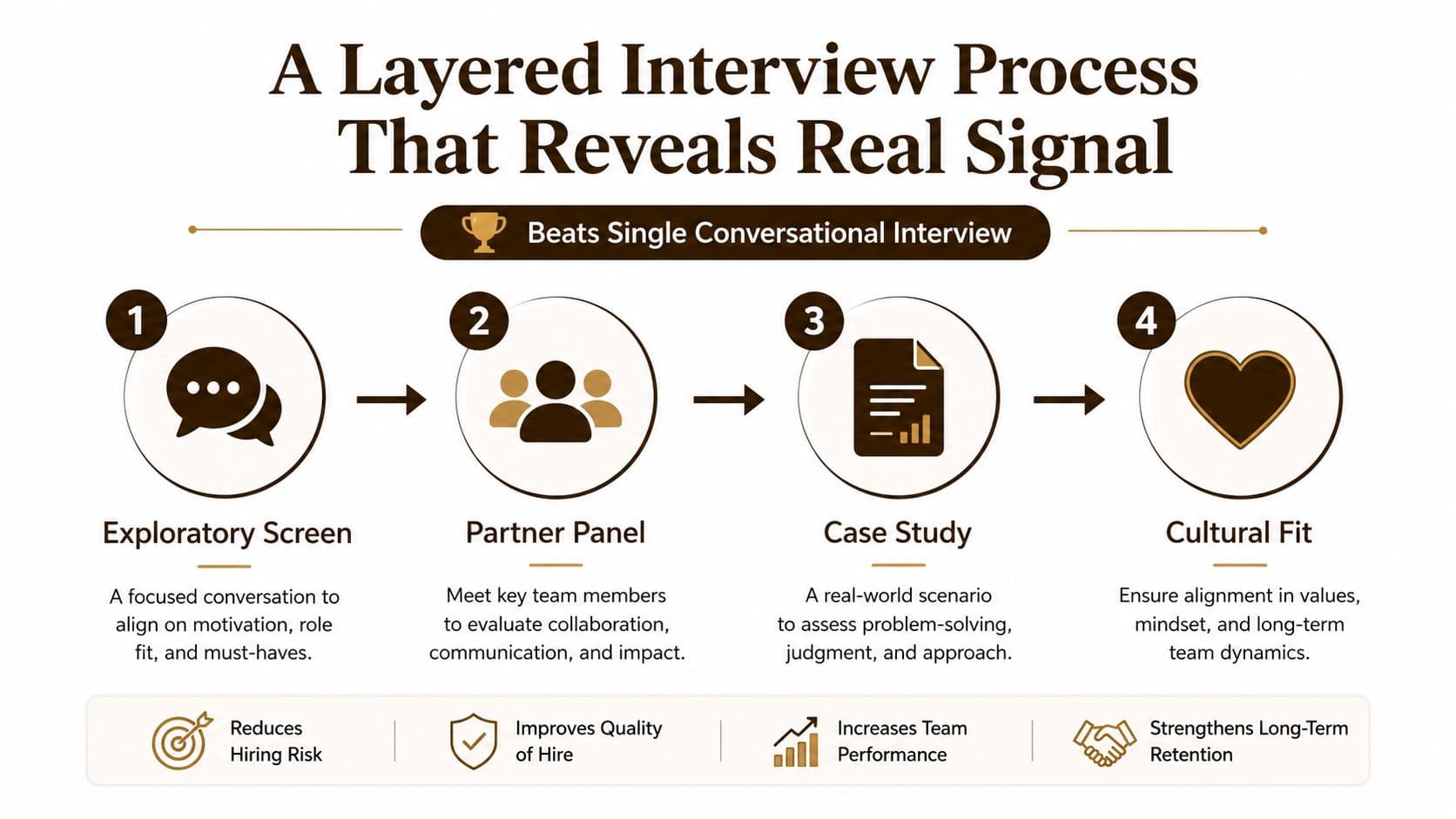
A single conversational interview is too thin for a senior hire. It rewards polish, rapport, and whichever partner talks first, not the lawyer who will keep matters moving when pressure hits. A layered process gives you a better read on whether the person will stay, perform, and fit the way the firm works.
Start with an exploratory screen. Keep it to about 30 minutes and use it to test two things, mutual interest and basic role fit. The point is not to close the hire. The point is to see whether the candidate's work style, practice focus, and reasons for moving line up with the role.
Then move to a partner panel tied directly to the scorecard. Each interviewer should own a different competency, such as client management, technical depth, or mentorship. That keeps the conversation from slipping into repetitive small talk and gives you cleaner debriefs, because everyone is reacting to evidence rather than instinct.
A work sample or case exercise should follow. For senior lawyers, that can be a memo discussion, a matter strategy scenario, or a redacted file review. The goal is not perfection. The goal is to see how the candidate thinks when the facts are incomplete, the stakes are real, and there is no obvious answer.
The final layer is a structured debrief with a written rubric. Avoid yes or no voting. Ask each interviewer to score the candidate against the same outcomes, then compare where the evidence lines up and where it does not. That kind of discipline keeps charisma from outranking competence.
For senior roles, the process should still fit inside a tight hiring window, as noted earlier. Longer searches weaken momentum, especially when a lawyer is balancing a competing offer or trying to keep a move confidential.
Firms that want more examples of process design can review Five Star Placements' blog, but the core approach stays the same. Screen for fit, test for judgment, score against the same outcomes, and decide fast enough to keep strong candidates engaged.
Profiles Beyond the Portable Book of Business
A lot of firms still start with the wrong assumption. They ask whether the senior associate can bring a portable book, even when the actual need is capacity, transition support, or better execution on work the firm already has. That default can narrow the pool too much and push out highly useful lawyers.
Three profiles often fit better
The first is the institutional-client lawyer. This person may not originate the work, but they know how to manage existing relationships, keep clients calm, and move matters forward without creating churn. The second is the succession candidate, the lawyer who can absorb work when a partner retires or steps back. The third is the specialized executor, the senior associate who can run complex matters from start to finish with little handholding.
The scorecard should weight these profiles differently. For institutional-client work, client-management skill and reliability matter more than origination. For succession coverage, transition readiness and trust-building matter more. For specialized execution, technical depth and independence should dominate the evaluation.
A skeptical partner usually asks, “Why wouldn't we just hire someone with business?” The answer is that not every seat is a rainmaking seat. Some seats exist to protect client continuity, reduce partner bottlenecks, or preserve matter quality when leadership changes.
A firm should choose the profile that solves the actual problem, not the one that sounds most impressive in a committee meeting.
A practical litigation example
A personal-injury firm replacing a retiring partner doesn't always need the new hire to arrive with a book. In one common pattern, the better profile is a senior associate who can try cases, manage claim timelines, and step into court-ready work quickly. The hire succeeds because the firm values trial-readiness and matter continuity more than originations.
The interview questions should follow the profile. Ask how they handled inherited matters, how they kept clients informed when a partner was unavailable, and how they responded when a case plan changed late in the process. Those answers tell you more than a résumé line about business generation ever will.
Flexible work design can help here. Experienced candidates don't always fit the same mold, and skills-based screening can reveal talent that a conventional template misses. If the firm wants the right lawyer, it should be willing to evaluate the right signals.
Compensation Benchmarking and Offer Negotiation
Comp should be settled before the first serious offer conversation. If the team waits until the candidate is excited, the firm is already behind. Senior lawyers read ambiguity as weakness, and they can usually tell when a range was improvised.
Start by benchmarking the market for the practice and seniority, then sanity-check that range against the firm's current associate scale and where the role sits on the partner-track spectrum. A senior associate on a leadership track is not priced the same way as a counsel-track hire with less runway to partnership. The structure has to match the role, or the offer will feel mismatched even if the top-line number looks fine.
Match the structure to the profile
| Profile | Base Range | Bonus / Variable | Title Lever | Best For |
|---|---|---|---|---|
| Institutional-client senior associate | Moderate to strong base | Modest performance-based bonus | Senior Associate or Counsel | Matter continuity and client management |
| Succession-focused hire | Strong base | Retention or transition-based variable | Senior Associate with clear advancement path | Partner retirement coverage |
| Specialized executor | Base balanced with upside | Bonus tied to delivery or matter milestones | Senior Associate or Counsel | Complex execution and technical leverage |
Three structures come up often. A base-heavy with discretionary bonus setup works when the firm wants stability and straightforward budgeting. A bonus-plus-stub-equity format can help if the lawyer is closer to partner-track expectations and wants a clearer upside story. A counsel-track with reduced base and upside may fit someone whose value is derived from technical depth rather than business origination.
Then negotiate in sequence. Anchor with the role structure, justify the number with the work and the level of responsibility, trade thoughtfully on the elements that matter, and close decisively. Soft levers often move the decision more than a small bump in base. Title, flexibility, remote design, relocation support, signing bonus, and a defined partnership timeline can all matter more than squeezing the last bit out of salary.
If the firm wants outside market help, Five Star Placements is one option for legal recruiting and screening across attorney roles. The useful lesson isn't the vendor choice itself, it's that comp should be part of the search design, not an afterthought.
Onboarding and the First 90 Days
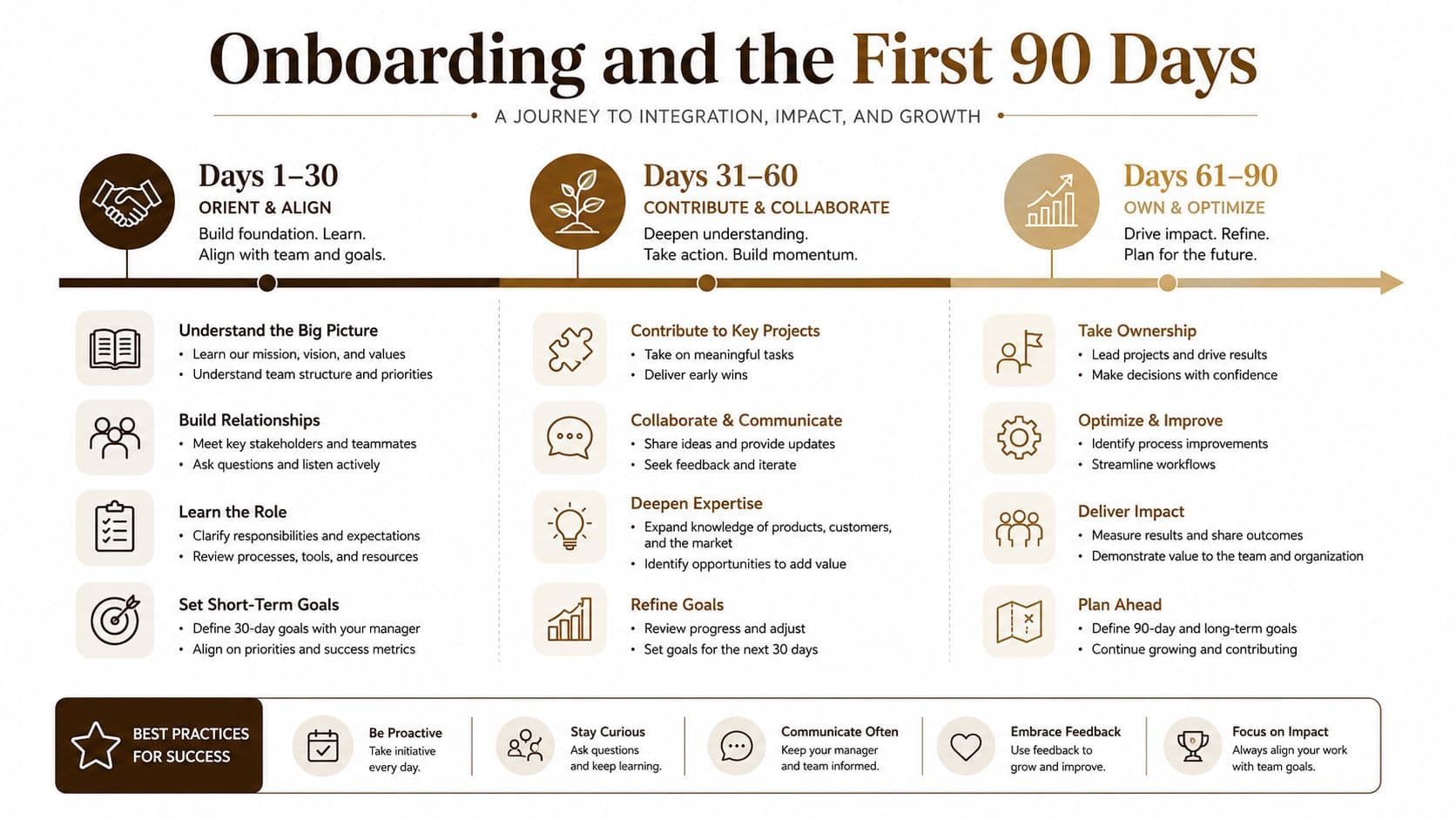
The first quarter should reflect the scorecard, not just the org chart. If the firm hired for matter ownership, then the early assignments need to give real ownership with the right guardrails. If it hired for client continuity, the onboarding plan should expose the lawyer to the clients and internal stakeholders who matter most.
Make the plan concrete
Turn the top two scorecard outcomes into a 30-60-90 plan that the new hire and partner sponsor co-own. The 30-day mark should focus on orientation, systems, and case or matter flow. By 60 days, the lawyer should be handling meaningful work with lighter review. By 90 days, the sponsor should be able to evaluate whether the hire is on track for the outcomes that justified the search.
Early matters matter because they signal what the firm really values. If the role was sold as high-trust execution but the first month is filled with trivial work, the hire will feel miscast. That mismatch is one of the fastest ways to lose a senior associate before the relationship has time to stabilize.
Use mentorship pairings with intention. Match the mentor to the competency gap, not just to availability. If the new hire needs help navigating partner communication, choose someone who does that well. If they need help with technical workflow, choose accordingly.
A short check-in rhythm helps too. Hold structured conversations at 30, 60, and 90 days and ask direct questions about workload, integration, blocked decisions, and where the firm's expectations are still unclear. Senior hires do not need coddling. They do need clarity.
Practical rule: the associates who stay are usually the ones whose first-quarter work matched what they were actually hired to do.
The last piece is measurement. Track 12-month retention, scorecard-outcome progress, and time-to-productivity. Those three signals tell you whether the hiring system worked, not just whether one person happened to work out. Feed that back into the next search, because the best hiring process improves only when the firm learns from what happened after the offer was signed.
If your firm needs help hiring senior associates who can stay and perform, Five Star Placements works on legal recruiting and screening for attorney roles across practice areas and seniority levels. Visit Five Star Placements to start a search built around role fit, retention risk, and the kind of hiring process senior candidates respect.
Need help filling a legal role?
Five Star Placements partners with law firms and legal departments nationwide.
Schedule a Call